
WARNING: This page contains some flashing animations and other images that may cause adverse reactions.
WARNING: This page contains some flashing animations and other images that may cause adverse reactions.
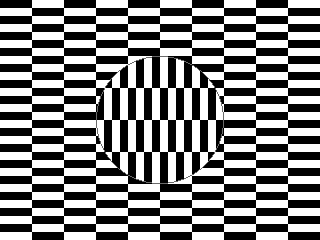
This illusion of a floating disk named after its creator, Hajime Ouchi, even works with one eye closed, and the further away you are from the image, the deeper the central circle appears until it looks like a hole with a lens moving over a cut-out.
A potentially nauseating version of this as a clock is available here.
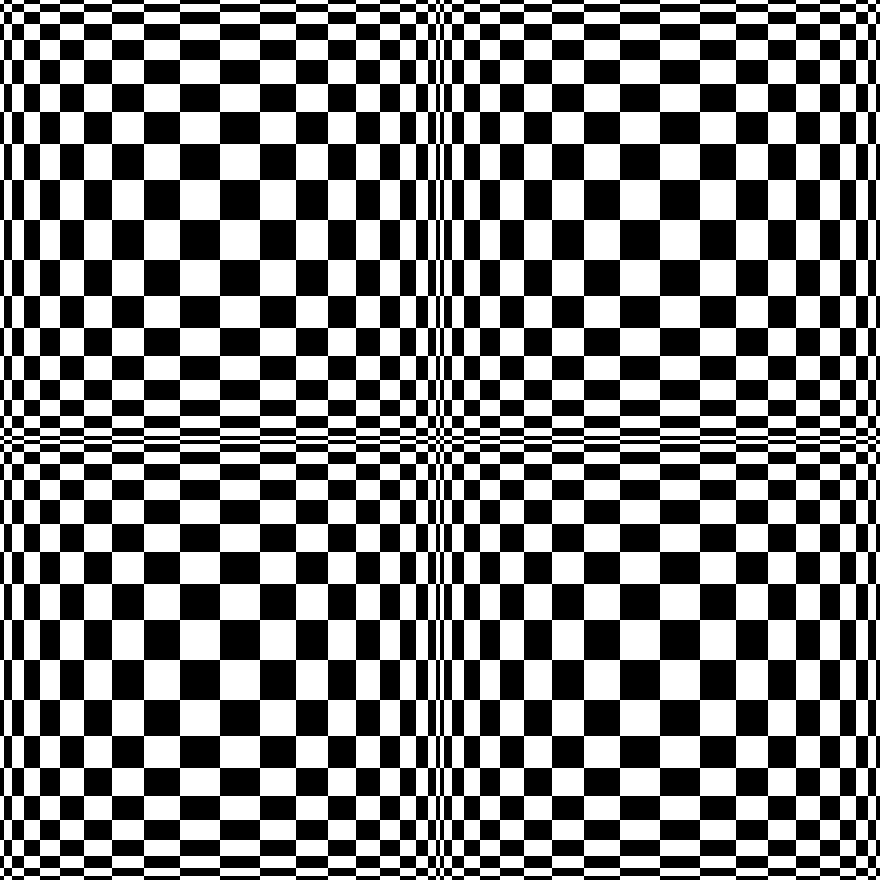
A simple pattern that creates squared circles and spirals, and is difficult to focus on one part without the other seeming to shift horizontally or vertically, as well as seeming to form central bulges.
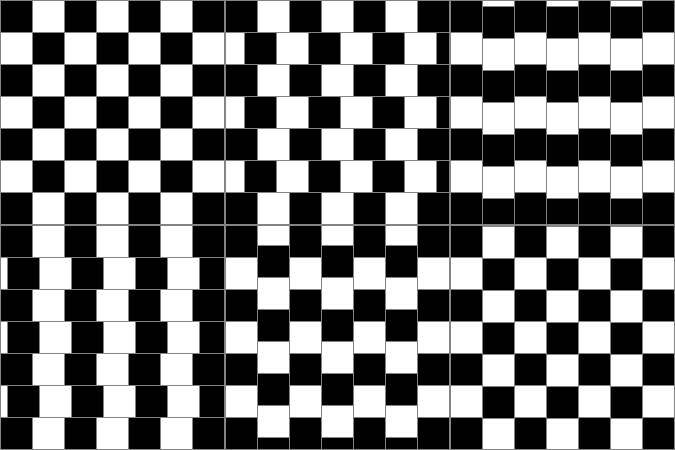
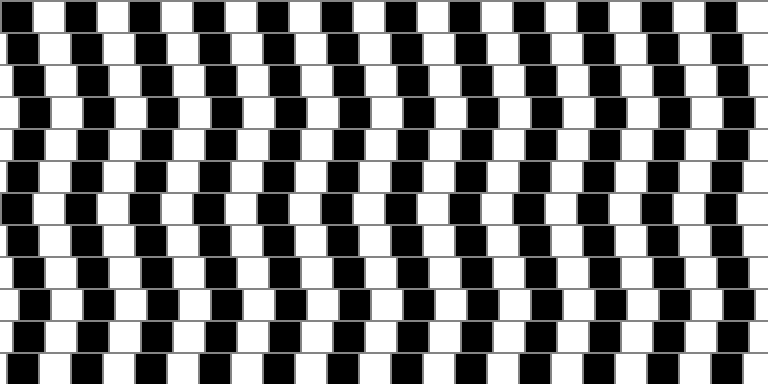
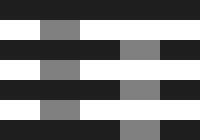
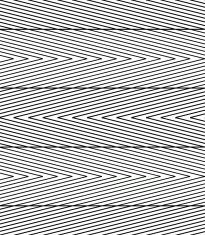
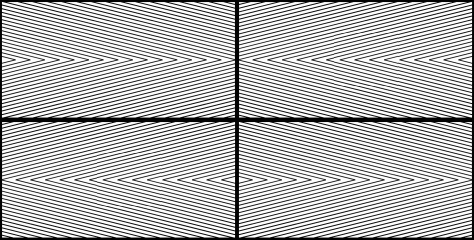
When alternate lines of tiles are slid to one side, the varying distances between areas of black and white cause the grout to infer a series of steps which change direction once the mid-point is passed.
Everything seems to move even though it's stationary. This image can be tiled to create a truly nauseous desktop background.
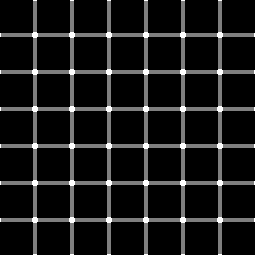
A well-known illusion where flashing grey spots appear.
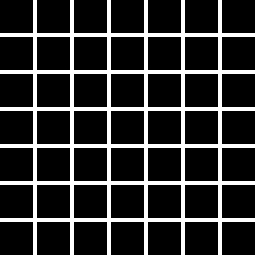
A variant with flashing black dots.
Although each horizontal band is of a uniform shade, the top of each appears to get darker as it reaches the boundary.

Rotating a light source makes the cubes appear to move in and out and external corners to become internal.
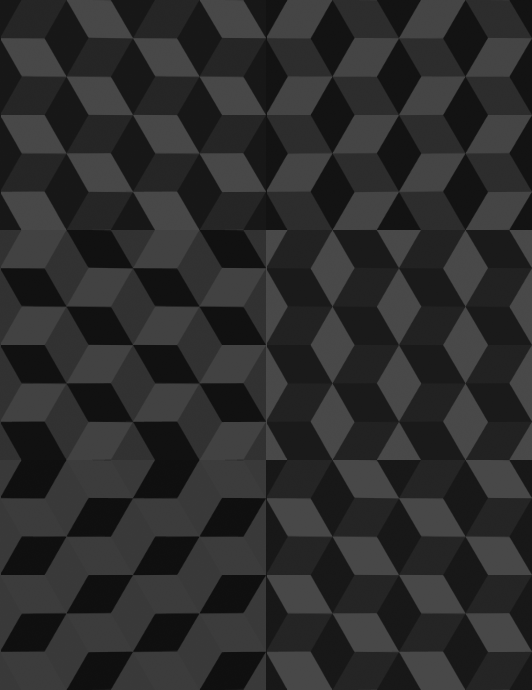
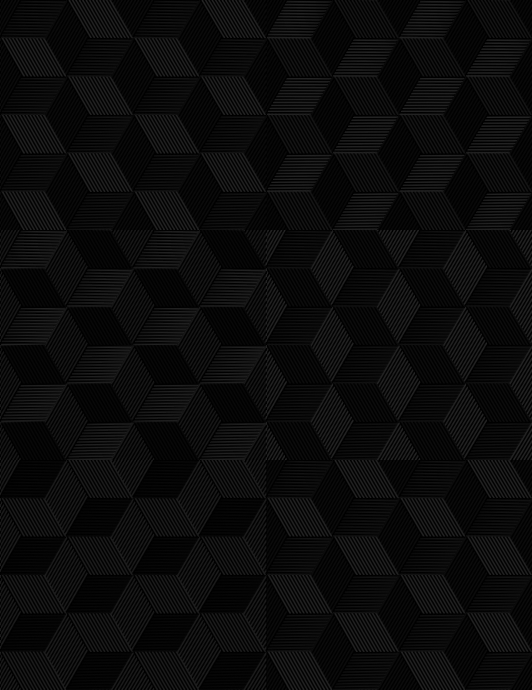
I discovered this by accident after setting up the latest version of Lightwave (my modelling program), which has shaded buttons. It's like a combination of the Café Wall & Hermann Grid illusions, which also produces a sense of each row moving in opposite directions. Much later, I learned it's a well-known effect called 'Gradient Square Alignments'.
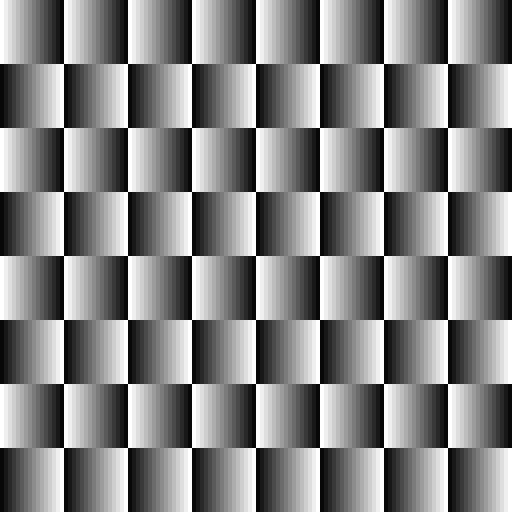
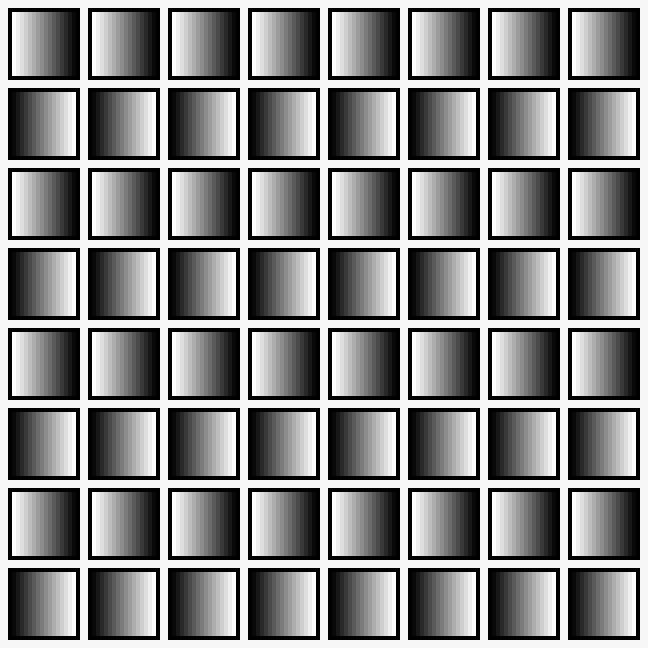
It seems that the actual gradients are almost irrelevent: all that matters is the contrast between the leading and trailing edges, with a central area different to the neutral background, in which case only four shades are needed. This picture just about maintains the illusion of motion (and the trapezoid effect), but certainly looks like a surface where alternate tiles are in front of the others, based on where the white and black lines are rather than the central grey.
All the images in this section and the next (Spinners) are my own developments, and whilst I wasn't sufficiently deluded as to think I'd actually discovered anything new, I wasn't prepared for the phenomenal illusions on Akiyoshi Kitaoka's site, where he makes full use of colour as well.
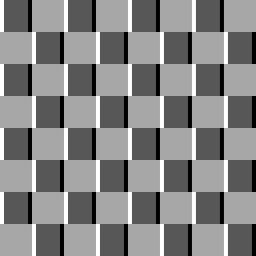
Simplifying it into two separate directions that seems to flow from the vertical centre.
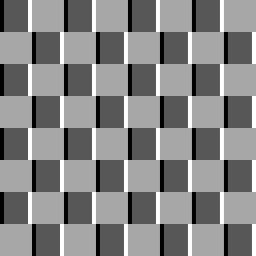
Taking elements from both the previous creates a shimmering curtain.
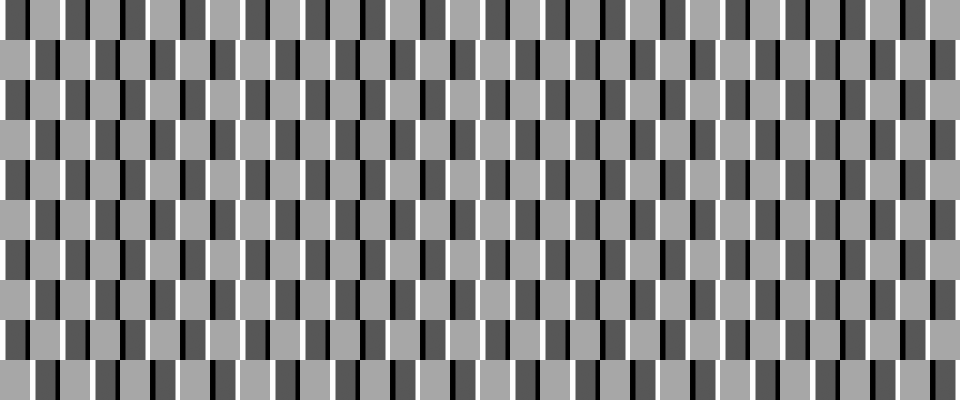
Bending the gradients into a curve emphasises the effect.
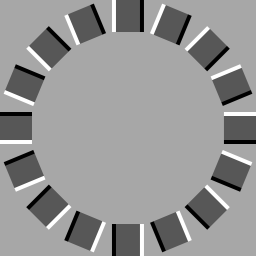
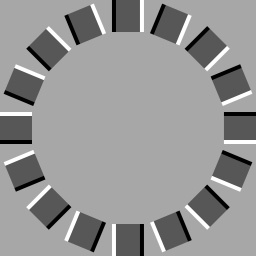
Reversing the gradients still works, as they over-ride the physical shape / direction of the arrow itself.
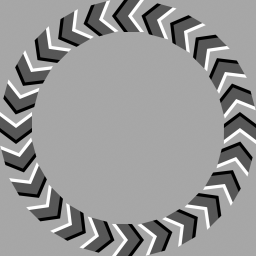
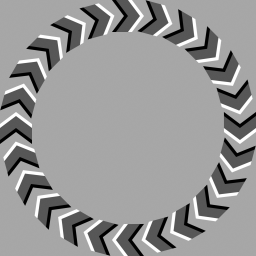
Even stranger, alternating the images produces an effect as if the entire shape is changing position, when only the black and white sections are swapping places.
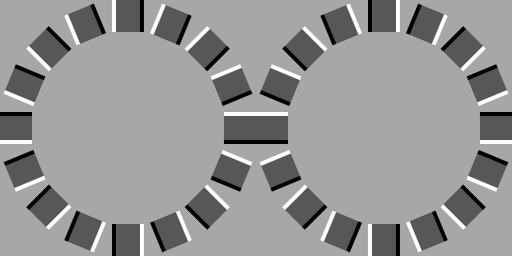
When slowed down to a fade, the effect is even more pronounced, for here each black and white section passes through the shade of grey that's in the centre, which then appears to shift.
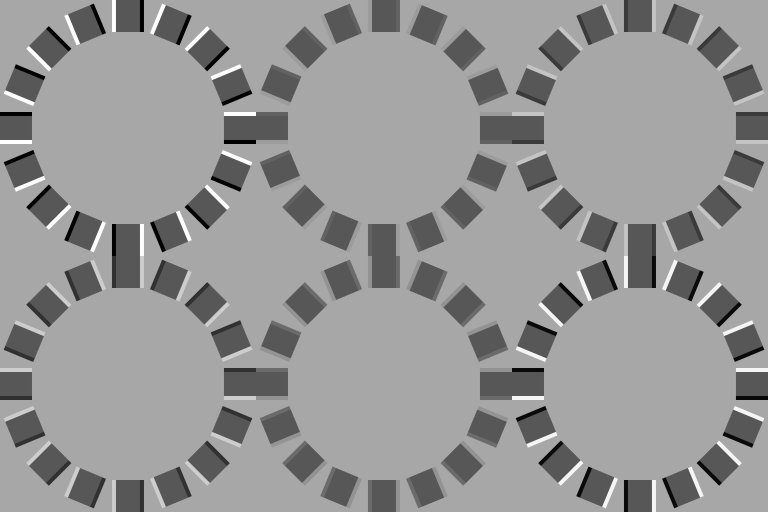
Joined end-to-end into a continuous snake.
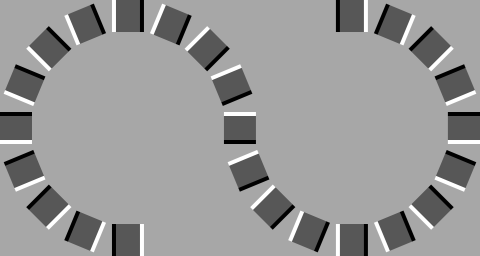
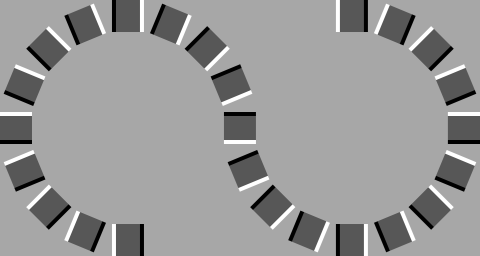
Endless meandering possibilities.
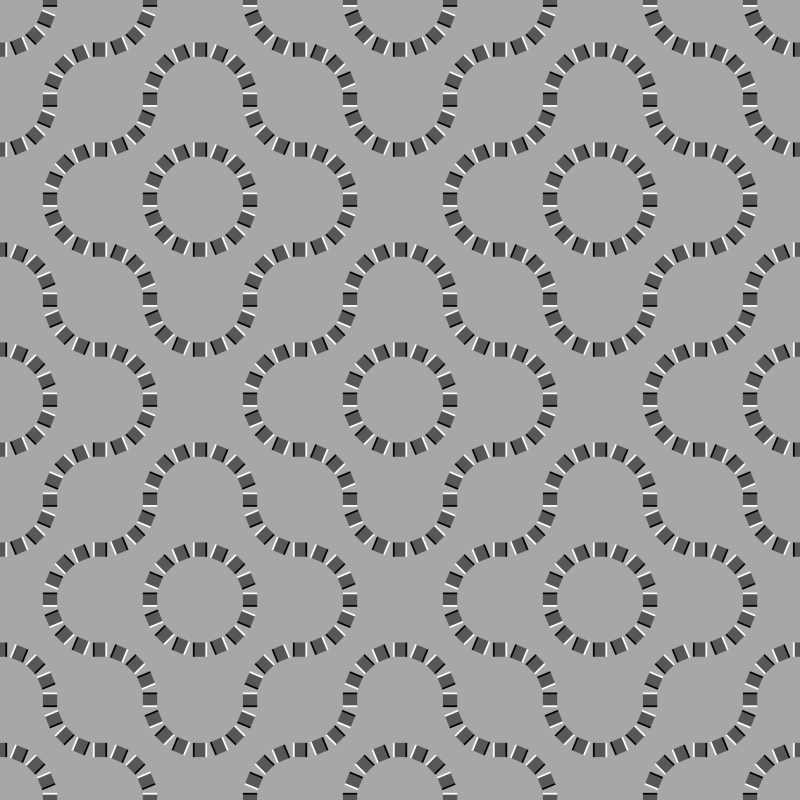
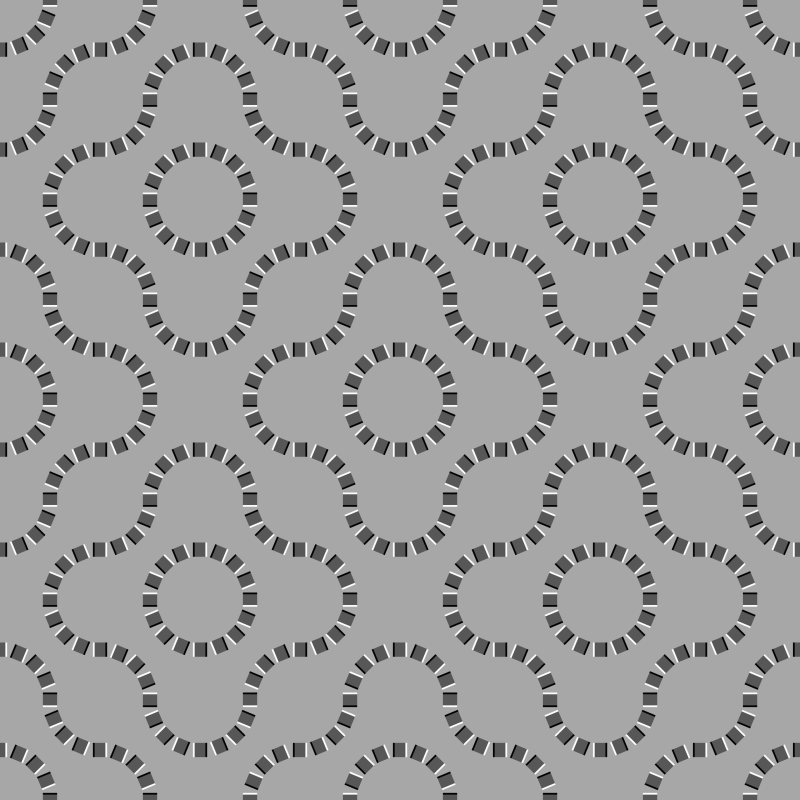
And just to change the orientation.
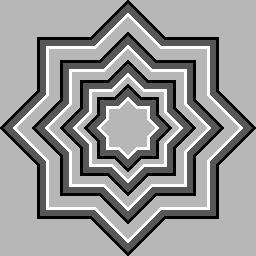
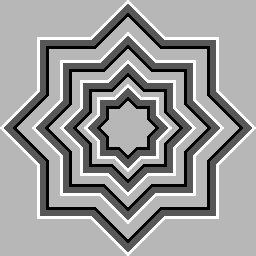
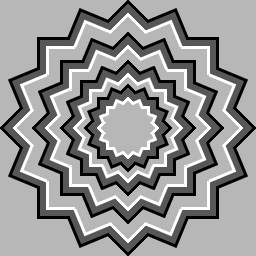
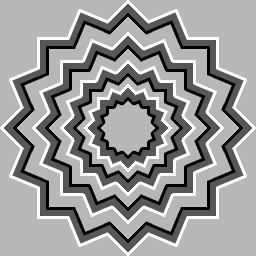
Not exactly the Alhambra, but still.
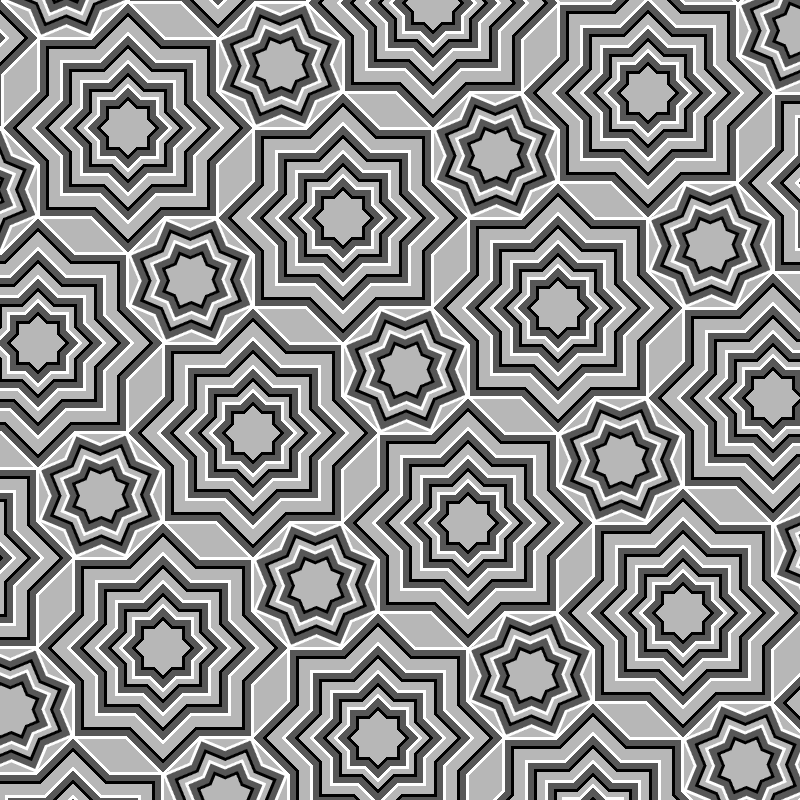
Taking the 8- and 16-point stars to their circular limits
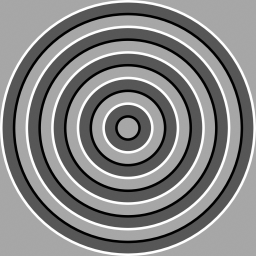
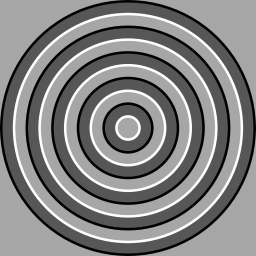
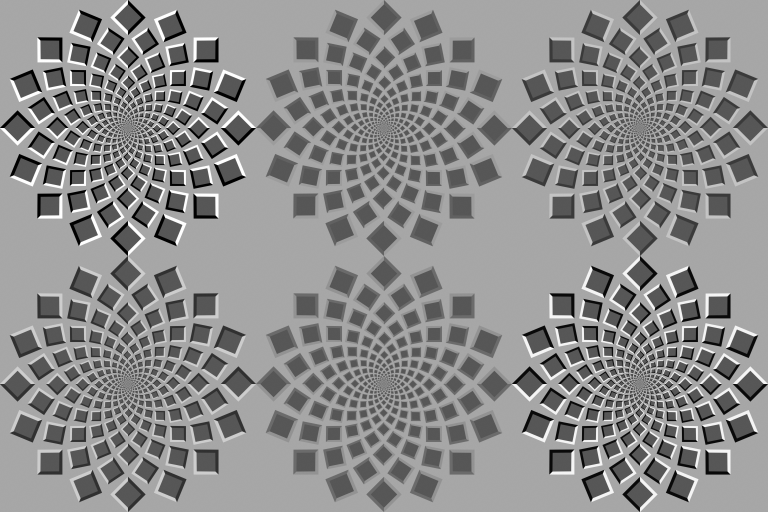
Square 'petals' in a symmetrical spiral based on an 80% reduction ratio. Secondary effects include the borders of squares being formed whose corners are centred in each flower, and some of the shapes appearing to be raised from the background whilst others seem depressed, despite the fact they're all the same (a well-known effect based on the fact our brain is accustomed to accepting light as originating from the top of its viewpoint).
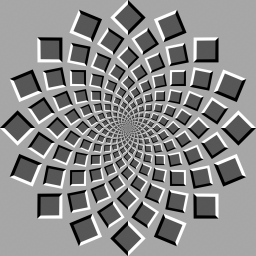
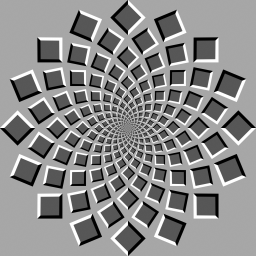
Cross-fading these creates a rocking motion, with the centre appearing to lag behind the outside, and the constant background paling slightly at the end of each change (due to an overall increase in brightness of the whole image as the whites become prominent?).
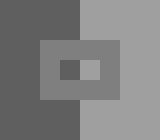
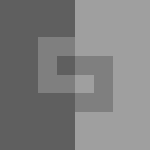
The centre areas are equal.

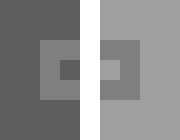
The grey areas are equal.
It is clear in the first image that the centre grey is constant, but as soon as the image is split, each part seems differrent.
This simple chequered pattern appears distorted because of the dots forming almost circular patterns.
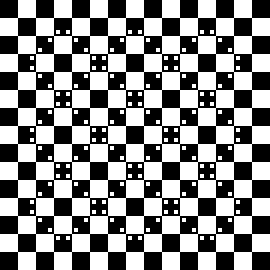
Adjusting the previous image results in a ripple that cause the centre to appear as if it's pushing forwards.
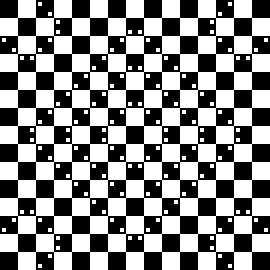
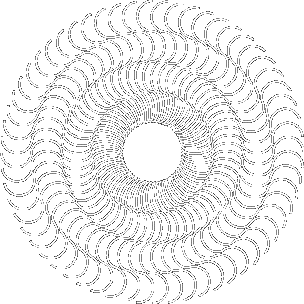
Look at the centre and slowly move your head in & out to make the elements appear to rotate in opposite directions, though when stationary they may also appear to form a (false) spiral.
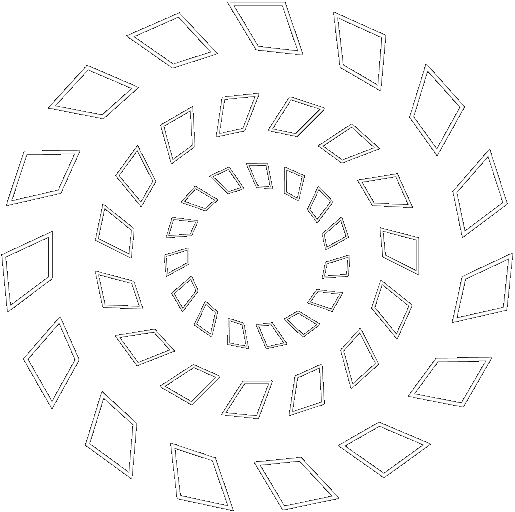
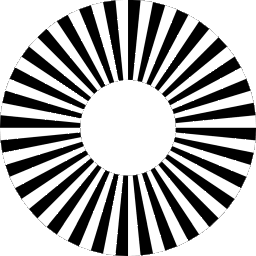
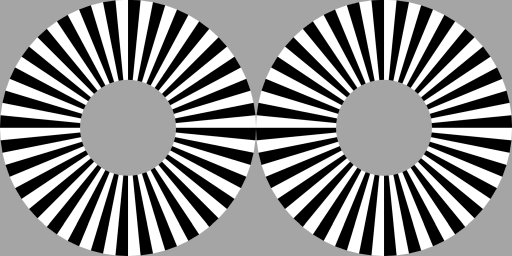
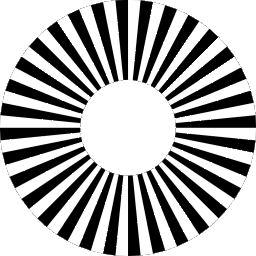
Two images of stationary disks which when displayed alternately seem to rotate in either direction, depending on which way the eyes were moving when they first saw the animation. To change the direction, move your eyes right-to-left, or left-to-right.
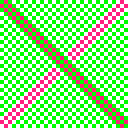
Even though the red cross is the same colour, the green or white context makes it appear as if it's two different shades.

yellow blue orange black red green purple yellow red orange green black blue red purple green blue orange